
Tree Roots and Septic Lines: Prevention Before the Problem
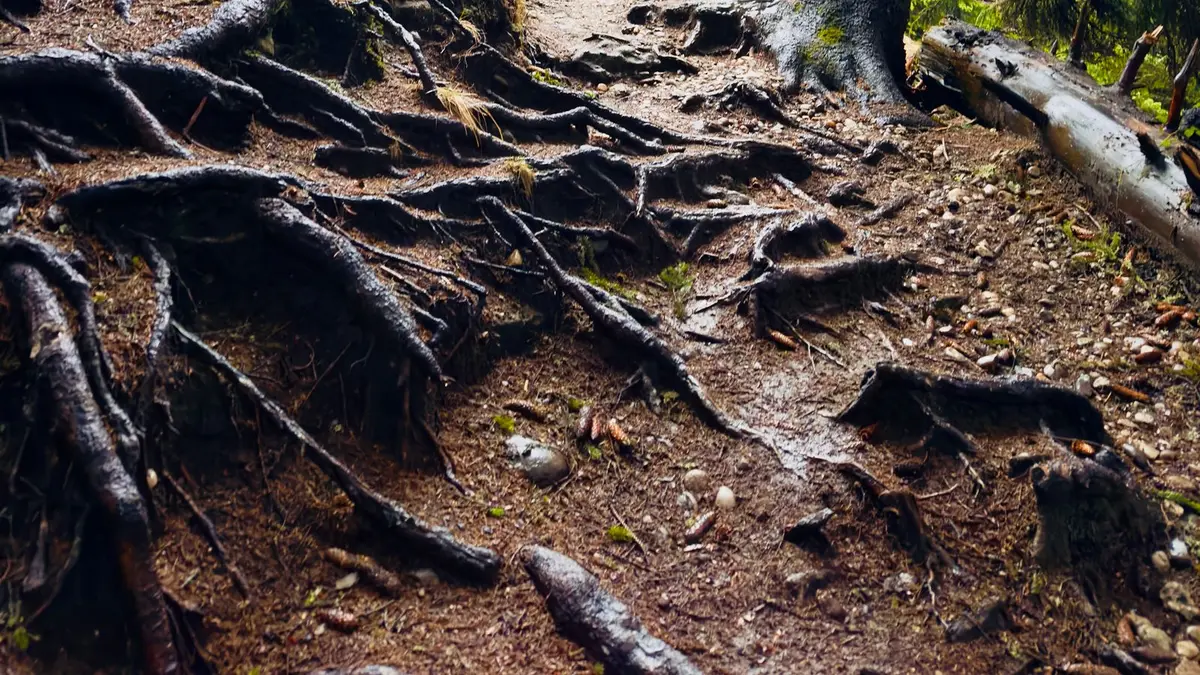
Roots don't break pipes by force so much as by patience. A drain line carries warm, nutrient-rich water, and the soil around it stays moist all summer. Roots grow toward that moisture, find a joint or a hairline crack, and send in fine feeder roots. Over a few seasons those turn into a mat that catches solids and blocks the line completely.
The trees that cause the most trouble
Here in Western Washington, the usual suspects are willows, poplars and cottonwoods, alders, and big-leaf maples — fast-growing, water-hungry trees with aggressive shallow roots. Older properties in Lewis and Grays Harbor Counties often have mature trees that were planted (or sprouted) long before anyone thought about where the drain field was.
Signs roots may be getting in
- Drains that slow down gradually over months rather than all at once
- Gurgling sounds in toilets or tubs
- Recurring backups that clear up and come back
- Lush, extra-green growth along the line from the house to the tank
- Roots visible in the tank or at the inlet when it's pumped
Planting safely near your system
- Keep large trees well away from the tank and field — a good rule is at least as far as the tree will grow tall
- Grass is the best cover over a drain field; shallow-rooted perennials are fine nearby
- If you have to remove a tree near the system, have the stump ground rather than dug out, so you don't disturb the lines
If you suspect roots, don't reach for chemical root killers from the hardware store — some will harm the tank and field. We can inspect the lines, clear the roots, and tell you whether a pipe section needs repair. Catching it early is far cheaper than replacing a drain field that roots have taken over.